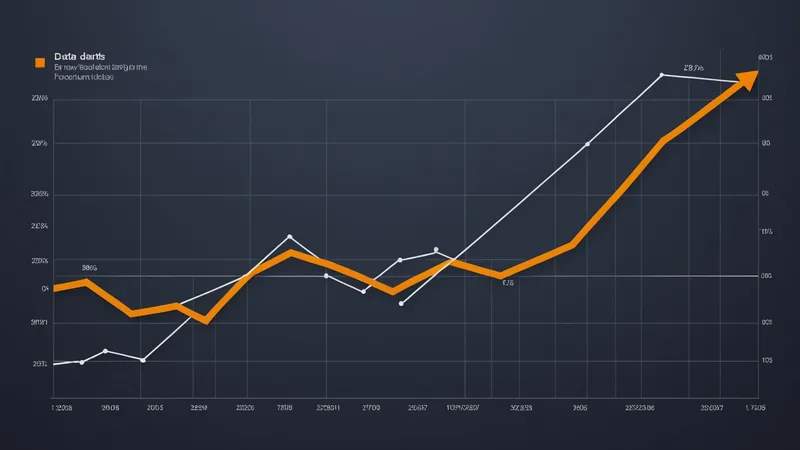
When a recipe video goes viral, a sequence of events starts that most CPG demand planning systems are not equipped to track until it's too late. The content spreads. Viewers look up the dish. Some of them search for the specific ingredients. Some of them buy those ingredients. Eventually — 7 to 14 days later on average — the purchase velocity shows up at the POS level and the demand planner learns that something moved.
The problem isn't that the signal was invisible. It was visible the whole time. It was just sitting in social platform APIs and search volume data in unstructured form, which is precisely the form that traditional demand planning systems can't ingest.
Natural language processing is what changes that.
The Problem with Unstructured Trend Data
Social listening data for CPG categories is abundant. Platforms expose post volumes, engagement metrics, trending hashtags, and often category-level search data. What they don't provide is a structured demand signal. A spike in posts mentioning "tahini recipes" is raw data. It does not tell you how much tahini to put on the truck or which DCs to stock.
The gap between raw social volume and actionable replenishment signal is the NLP problem. Three things need to happen:
Entity extraction. Identify which ingredient or product category the social content is about. "Using almond flour for the first time" maps to the nut flour category. "Perfect hot honey dip" maps to hot honey. "Obsessed with this tinned fish trend" maps to canned fish — specifically, the premium sardine and mackerel segment that drove shelf shortages in 2022 and 2023 at multiple grocery retailers.
Purchase-intent classification. Not all food content signals purchase demand. A nostalgic post about a grandmother's recipe that uses a particular ingredient does not have the same demand signal value as a post that explicitly says "I bought three jars of this." NLP classifiers can distinguish between aspirational content, active purchase intent, and completed transaction language — and weight the signal accordingly.
Velocity tracking. A single viral post with 2 million views is interesting. The same post spawning 40,000 derivative posts over 5 days is a demand signal. The velocity of the trend — how fast is it accelerating? — is a better predictor of actual purchase behavior than peak volume at any single moment.
From Signal to SKU: The Mapping Challenge
Entity extraction tells you that tahini is trending. The next question is: which SKUs in your catalog are affected, and at which DCs?
This is where the supply chain specificity comes in. A CPG manufacturer selling sesame-based condiments has multiple SKUs that could benefit from a tahini trend: tahini paste in various sizes, sesame-based sauces, hummus that uses tahini as a key ingredient. Each of those SKUs has a different velocity profile, different lead times, and is distributed across different DC-to-store networks. The social signal applies differently to each one.
Effective NLP-to-replenishment translation requires a product taxonomy that maps ingredient and category mentions to specific SKU families, and from there to the DC-level positions where the demand will likely materialize first. A retail-heavy tahini trend will hit urban grocery DCs before rural ones. A recipe that went viral on a platform with a particular demographic skew will be more predictive for certain retail channels than others.
This mapping is a one-time configuration step per category, and it's something we work through with each team during onboarding. Once the taxonomy is built, new signals run through it automatically.
A Worked Example: The Tinned Fish Scenario
To make the mechanism concrete, consider a mid-size specialty food manufacturer supplying a handful of grocery chains with a line of tinned fish products. In early Q2, a food trend accelerates on social platforms centered around high-quality sardines and mackerel as a pantry protein. NLP parsing of social content shows:
- Post volume mentioning the specific category increases 4x over a 10-day window
- Purchase-intent language appears in approximately 18% of posts — above the 10% baseline that typically precedes shelf movement
- The trend is accelerating, not plateauing — derivative content (people sharing their own version of the trend) is growing faster than the original content
The NLP model fires a demand adjustment signal on day 6 of the trend window. The signal maps to the manufacturer's sardine and mackerel SKUs, flags the grocery chain DCs serving urban and suburban markets as highest-priority, and estimates a 25 to 40% lift in weekly velocity with an onset lag of approximately 9 days.
The demand planner reviews the signal — 15 minutes of work — confirms the category mapping looks right, and approves a partial pull-forward of the next replenishment cycle for the flagged SKU-DC pairs. The replenishment order goes out 8 days ahead of when POS would have triggered it automatically.
The manufacturer does not run out of stock during the trend peak. The fill rate holds. The scenario is not a home run prediction every time — NLP signals carry uncertainty that has to be acknowledged explicitly. But even at 65% directional accuracy, acting on early signals more often than not reduces stockout exposure.
What NLP Doesn't Do Well (And the Calibration That Matters)
We're not arguing that NLP social listening is a reliable predictor of magnitude. It's a directional indicator. It's better at answering "is demand about to go up for this category?" than "how much will it go up by?"
The categories where NLP signal works best are ones with strong direct-ingredient specificity — where the social trend names the product almost exactly. Tahini, tinned fish, specific chile varieties, matcha powder, specific spice blends. Categories where the connection between social content and purchase is more abstracted — "healthy snacking" trending doesn't tell you which snack bars move — are harder to translate directly into SKU-level demand adjustments without additional category mapping work.
The other limitation is platform scope. Social trend signals from public APIs are not a complete picture of consumer intent. They over-represent certain demographics and platforms. Teams that treat a social signal as a census-level demand prediction, rather than a directional early-warning flag for specific categories, end up over-reacting to signals that don't actually translate to meaningful velocity shifts at the store level.
Our approach to this at Supplytrx is to combine social NLP signals with search volume data and category velocity baselines, rather than treating any single signal source as authoritative. The combination is more reliable than any single source alone — and it produces confidence levels on demand adjustments, not just binary alerts.
The Practical Workflow Integration
For a demand planner who already has a full morning routine built around their planning tool dashboard, a new signal source is only useful if it integrates into that existing workflow rather than creating a parallel task queue.
The way we've built the NLP signal output is as a demand adjustment recommendation that surfaces inside the planning cycle, not outside it. When an NLP signal fires for a relevant category, the demand planner sees it as a flagged item in their next planning review: "NLP trend signal for tinned fish — suggested adjustment: +30% velocity for 3 weeks, confidence: medium, 12 affected SKU-DC pairs." They approve, modify, or dismiss. The decision stays with the planner. The signal does the legwork of turning 4 million social posts into a 15-minute planning conversation.
A viral recipe is ephemeral. Its effect on a specific SKU's replenishment position is measurable and actionable — but only if there's a pathway from the unstructured signal to the structured planning decision. NLP is that pathway.